
Insights on Leadership
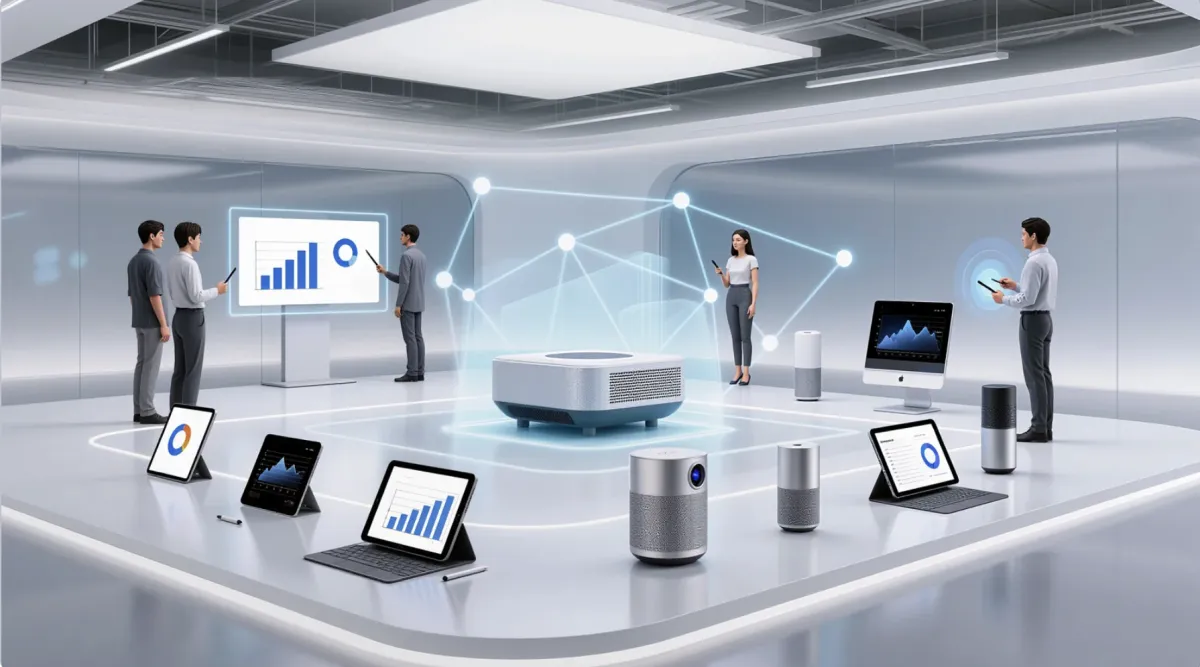
How Managing Up Looks When Leadership Is Shaped by AI
Five Practices That Distinguish Effective Managing Up in AI-Driven Organizations
AI is changing how work gets done and how decisions are made. Speed has increased. Data is abundant. Expectations are higher.
What has not increased at the same pace is clarity.
Senior leaders today are navigating an environment filled with dashboards, summaries, forecasts, and recommendations, often generated faster than they can be meaningfully interpreted. Decisions are made under pressure, with less tolerance for noise and less time to reflect.
At the same time, many professionals across organizations are quietly grappling with a different set of questions. Will AI replace parts of my role? Should I be learning these tools more deeply? Do I need a backup plan? And how do I remain relevant and indispensable as the nature of work continues to shift?
These questions are shaping how people show up, how they prioritize their time, and how they think about their value to the organization, even when they are not voiced openly.
In this environment, the way leaders and professionals manage up becomes more visible and more consequential.
Managing Up as a way to remain relevant and indispensable in the age of AI begins with understanding the leadership environment leaders are operating in.
From what I have observed across organizations, professionals who manage up effectively are making a small number of meaningful shifts in how they think about their role, their value, and how they support leadership decision making.
Three of those shifts stand out.
1. Managing Up Beyond AI Adoption
As AI becomes more widely adopted, a distinction begins to emerge in how professionals show up.
Some professionals hesitate to adopt AI. Others are learning to use it. The leaders who manage up effectively move beyond application, using AI as a tool while adding value in the areas it cannot: judgment, context, and alignment.
These are the leaders who become thought partners and strategic thinkers, remaining indispensable while accelerating their careers.
What would shift if more teams operated at this level?
Effective Managing Up at this stage includes the ability to read unspoken expectations, sense urgency or resistance, adjust framing based on timing and context, and anticipate how a technically sound recommendation will land culturally.
AI can process information. It cannot interpret organizational nuance.
2. Managing Up as Interpretation, Not Information
Professionals who manage up effectively help leaders move from information to judgment. Their value is measured not by how much data they provide, but by how much clarity they create.
They are also keenly aware of their position in the organization. Sitting closer to teams, clients, and the day-to-day realities of execution, they see early signals of friction, momentum, resistance, and opportunity long before those signals appear in formal reports or dashboards. This proximity gives them access to intelligence that is often invisible higher up the system.
In environments shaped by AI, effective Managing Up looks less like reporting activity and more like curating intelligence.
AI can summarize what happened.
AI can surface correlations.
AI can generate options.
What it does not do on its own is help leaders answer the questions beneath every decision.
What matters most right now?
What are the trade-offs?
What are the downstream implications?
Where is risk being underestimated or overstated?
Managing Up, in this context, becomes the means through which that otherwise invisible intelligence flows upward. By passing along what they are seeing, sensing, and hearing, these leaders help senior decision makers factor real-world context into strategic choices. The value is not in volume of information, but in relevance, timing, and interpretation.
3. Managing Up as the Bridge Between AI Output and Leadership Decisions
Many organizations assume that better AI will naturally lead to better decisions. In practice, research from institutions such as MIT and others suggests that many AI initiatives struggle not because of the technology itself, but because organizations fail to align people, judgment, and decision making around the tools.
Effective Managing Up often shows up as integration.
The integrator helps leaders connect AI generated insight with organizational priorities, recommendations with risk appetite, and speed with long-term direction.
Without this integration, decisions may be faster, but not necessarily wiser.
With it, leaders gain confidence that technology is informing judgment, not replacing it.
What effective Managing Up looks like in action
Consider a familiar scenario.
An executive team receives multiple AI generated analyses pointing to operational efficiencies. Different functions interpret the data differently. Tension emerges. Decisions stall.
One leader reframes the discussion.
Here is the pattern across these inputs.
Here is what the models do not account for.
Here are two paths forward and what each means for our people, timeline, and risk.
No new data is introduced.
What changes is clarity.
That moment is Managing Up in practice, helping leaders see the decision more clearly, not simply more quickly.
The principles remain foundational, the expression reflects the environment
The core principles of Managing Up remain consistent.
Creating value for leaders and the organization
Clarifying expectations
Building trust and credibility
Ensuring contributions are visible and aligned
These principles form the foundation of effective leadership.
What changes is how they are expressed in environments shaped by AI. Managing Up now shows up less through execution and more through interpretation, anticipation, and integration.
Five Practices That Distinguish Effective Managing Up in AI-Driven Organizations
1. Curating insight instead of reporting information
Effective Managing Up centers on meaning. Leaders who do this well move beyond sharing dashboards or AI summaries and instead surface patterns, implications, and risks that require attention.
This often shows up as highlighting one emerging trend, explaining what it means for priorities or timelines, and flagging a risk the data does not capture.
2. Providing anticipatory intelligence
AI predicts patterns, but it does not understand relationships, politics, or human timing.
This often shows up as explaining how an AI recommendation is likely to land with stakeholders, whether the timing aligns with executive priorities, or whether the team has the capacity to absorb another change.
3. Adapting to leaders’ cognitive reality
Beyond communication style, effective Managing Up reflects awareness of cognitive load and decision fatigue.
This often shows up as choosing whether to lead with risks or opportunities, deciding between a short synthesis or a detailed narrative, or replacing a dashboard with a clear verbal framing when leaders are overwhelmed.
4. Integrating AI input with human judgment
Managing Up becomes less about sharing information and more about integration.
This often shows up as clarifying where AI recommendations should inform a decision and where human judgment should override the model due to real-world nuance, stakeholder impact, or long-term implications.
5. Building trust through transparency
Trust grows when leaders understand how AI was used and where judgment was applied.
This often shows up as explaining which AI tools were used, what assumptions were validated, and how conclusions were shaped by organizational context rather than blindly accepted from output.
Why this matters beyond individual effectiveness
When Managing Up is practiced consistently, organizations experience faster decisions with fewer reversals, clearer alignment across teams, better adoption of AI tools, and reduced rework and miscommunication.
These outcomes rarely come from better technology alone. They come from how people interpret, frame, and act on intelligence together.
A closing reflection
AI will continue to change how work gets done.
What differentiates leaders and organizations is not access to intelligence, but the ability to turn intelligence into clarity, judgment, and alignment.
Effective Managing Up makes that possible.
It is not about control or politics.
It is about helping leaders see clearly in environments that move faster than ever.
Organizations that want leaders to think and operate at this level often explore this work through private master classes, leadership offsites, or cohort-based development experiences.
If you are interested in bringing Managing Up in the Age of AI to your team or organization, I welcome the conversation.
To explore how this work could support your leaders: Start a Conversation

Quick Links


Copyright 2026. N-BAC. All rights reserved.